
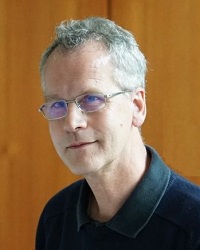
 Pof. Christian Heipke
University of Hannover, Germany
E-Mail: sekretariat[At]ipi[Dot]uni-hannover[Dot]de
Christian Heipke is a professor of photogrammetry and remote sensing at Leibniz Universität Hannover, where he currently leads a group of about 25 researchers. His professional interests comprise all aspects of photogrammetry, remote sensing, image understanding and their connection to computer vision and GIS. His has authored or co-authored close to 500 scientific papers, more than 100 of which appeared in peer-reviewed international journals. He also supervised more than 40 PhD candidates as main supervisor.
He is the recipient of the 1992 Otto von Gruber Award, the 2012 Fred Doyle Award, both from the International Society of Photogrammetry and Remote Sensing (ISPRS), the 2013 Photogrammetric (Fairchild) Award from ASPRS, and the 2022 Albrecht Meydenbauer Medal from DGPF. In 2023 he was made an Honorary Fellow of the Indian Society of Remote Sensing. In the same year he received an honorary doctorate from the University of Stuttgart in Germany. He is an ordinary member of various learnt societies incl. DGK (German Geodetic Commission), acatech (German Academy for Technical Sciences), IAA (International Academy of Astronautics) and the European Academy of Sciences and Arts.
From 2004 to 2009, he served as vice president of EuroSDR (European Spatial Data Research, formerly known as OEEPE). From 2011-2014 he was chair of the German Geodetic Commission (DGK), from 2012-2016 ISPRS Secretary General, and from 2016-2022 ISPRS President. Currently he serves as ISPRS Past President.
Title: A few thoughts on AI in photogrammetry and remote sensing
Christian Heipke, Institute of Photogrammetry and GeoInformation, Leibniz University Hannover, Germany
Photogrammetry is a technique for image capture and analysis, as well as 3D reconstruction from images, which has its roots in the 19th century. When space images became available, remote sensing was added to the name of the discipline. Recently, also the term computer vision has been extensively used to describe essentially the same methods, techniques and algorithms, which are increasingly based on recent developments in artificial intelligence, machine learning and deep learning.
After a short introduction we will discuss current research questions and new applications, where a focus is laid on methods borrowed from deep learning, e.g., digital image matching, the derivation of image orientation and 3D surfaces as well as automated image analysis.
We will then look at the general state of the art in these domains and point out, what is currently possible and where remaining challenges exist.